

Whiskerology!
Long hair, short hair, red hair, bearded ladies, bearded men, wigs, periwigs, and hair as a tell
If you open this newsletter all the time, if you forward to your friends and co-workers, if it challenges you to think in new and different ways, consider subscribing.
And if you haven’t listened to this week’s episode of The Culture Study Pod, it’s all about Why Montana Is So Obsessed With Itself. If you’re from the West, in love with the West, or hang around with someone who’s in either one of those buckets, you’re gonna appreciate this one.
What You Might Have Missed in the Culture Study Universe This Week:
The first in our playlist crowdsourcing series: PUMP UP SONGS (I put together the Top 100 in a pretty ridiculous playlist at the end of this piece)
The Great Feminist Exhaustion (come for the comments section)
What Were Your Parents Right About? (Surprisingly hilarious and moving!!!)
I won’t be annoying and put this in giant font but I will put it in caps lock: THIS INTERVIEW IS SO FUN. I knew, the second Sarah Gold McBride talked about in a Culture Study comments section many months ago, that it would be interesting, but I had no idea how fun it would be. So many smart, dedicated people can and have written good books, but it’s a special bonus skill to make those books not just fun, but addictive — even thrilling. That’s how I felt reading Whiskerology, which details the “culture of hair” in the 20th century, and how I know you’ll feel reading this interview. It just explains so much! Hair is so weird, and so culturally freighted! It’s bonkers!!!
If you’ve ever wondered why men (of all races!) in the 18th century wore weird white wigs in hair styles like George Washington’s: she’s got you. If you’ve been annoying by someone born before 1950 talking about facial hair like it’s a sign of moral failure: she’s got you there, too. We cover bearded ladies, disguise wigs, cross-dressing, all manner of racialized hair discourses — just believe me when I say it’s a romp, and you’re gonna leave this feeling like you understand something about the world in a way you didn’t before. And isn’t that the best?
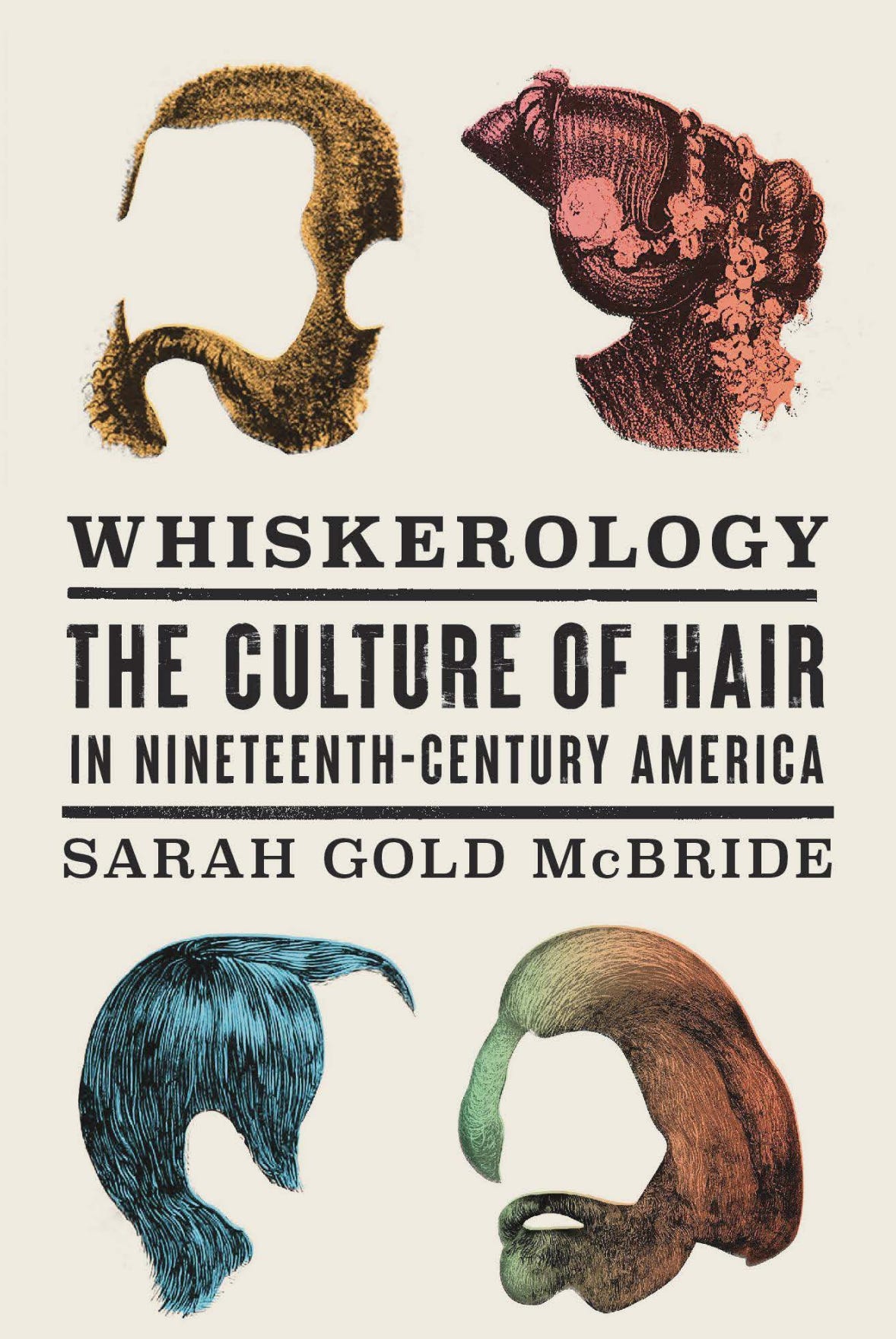
It’s a cheat to use the first question to ask about something that shows up on the very first page of the book, but my rationale is sound: if you chose it to open the book, it’s something that’s not only weird and compelling, but also speaks to the themes of the book as a whole. And so: let’s talk about this weird passage from an obscure French book of “beauty secrets” that was reprinted dozens of times in publications across the U.S.
Coarse black hair and dark skin signify great power of character, with a tendency to sensuality. Fine hair and dark skin indicates strength of character, along with purity and goodness. Stiff, straight black hair and beard indicate a coarse, strong, rigid, straightforward character. Fine dark brown hair signifies the combination of exquisite sensibilities, with great strength of character. Flat, clinging, straight hair a melancholy but extremely constant character. Harsh, upright hair is the sign of a reticent and sour spirit; a stubborn and harsh character.
Coarse red hair and whiskers indicate powerful animal passions, together with a corresponding strength of character. Auburn hair, with florid countenance, denotes the highest capacity for enjoyment or suffering. Straight, even smooth and glossy hair denotes strength, harmony and evenness of character, hearty affections, a clear head anD superior talents. Fine, silky, supple hair is the mark of a delicate and sensitive temperament, and speaks in favor of the mind and character of the owner. Crisp, curly hair indicates a hasty, somewhat impetuous and rash character. White hair denotes a lymphatic and indolent constitution; and we may add that besides all these qualities there are chemical properties residing in the coloring matter of the hair-tube which undoubtedly have some effect upon the disposition.
Thus red-haired people are notoriously passionate. Now red hair is proved by analysis to contain a large amount of sulphur, whilst very black is colored with almost pure carbon. The presence of these matters in the blood points to peculiarities of temperament and feeling which are almost universally associated with them. The very way in which the hair flows is strongly indicative of the ruling passions and inclinations, and perhaps a clever person could give a shrewd guess at the manner of a man or woman's disposition by only seeing the backs of their heads.
I found the text in full by googling the first sentence of the passage — and the first result was from the New Jersey Herald, which put it online as a “from the archives” post (originally printed on February 27, 1868).
Can you introduce us to this idea that our hair communicated something essential about our inner selves — and why it became so prevalent in the 19th century? (I basically found every single part of this intro enthralling but please mention the cult of sincerity, I’m obsessed)
I’m so glad you pulled out this passage because I completely agree: it is just so weird! If this list of correspondences between hair and personality had appeared just once in a random newspaper, that would be one thing, but I saw it over and over again! In total, I found this passage in over 50 newspapers and magazines—and that only accounts for publications that have been digitized! (The list of titles is delightfully wacky, too: from local papers like the New Jersey Herald or the Daily Alta California, to high-brow magazines like Harper’s Weekly, to specialized trade publications like The Monthly Journal of the Brotherhood of Locomotive Engineers.)
I became kind of obsessed with tracking down this passage as many times as I could because I loved how, both in its content and its broad circulation, it perfectly captured the core idea of this book: that all different kinds of people living in the United States during the nineteenth century believed that hair had the power to reveal the truth about the person from whose body it grew. Hair was broadly understood to be capable of quickly and reliably conveying important information about a stranger’s core identity—especially their gender or their race—as well as their personality: whether they were courageous, ambitious, sketchy, or likely to commit a crime, for example. One of the most exciting and surprising findings of my research was that, in some contexts, hair was actually thought to be more more reliable than other body parts that we more often think of as relevant to the way Americans have tried to read identity from the body, like the shape of the skull or even the color of the skin.
That’s the other big claim I’m making in this book—that from a nineteenth-century perspective, hair truly was a part of the body. So much of its significance to nineteenth-century understandings of identity has been overlooked by scholars, I think, simply because we don’t share that same conception of hair today. Hair still matters, absolutely, but hair isn’t really thought of as part of the body anymore; hair grows from the body but isn’t really of it. But in the nineteenth century, my research shows, it really was as essential to the body as any of its flesh-and-bone parts.
So, why did hair become so important—and so freighted with significance—in the nineteenth century? It’s really rooted in the broader economic, political, and social changes that rocked the U.S. between roughly 1800 and 1900. I teach my students about this almost every semester because I think it’s hard to wrap our heads around just how profoundly virtually every single facet of the country changed over that one hundred year period. It’s like the greatest hits of structural change: abolition, capitalism, urbanization, immigration (and immigration restriction), colonization (and, by the end of the century, imperialism), national transportation and communication networks, mass media, mass voting rights for white men, white supremacist violence against Black and Indigenous people, new understandings of science and medicine—it’s dizzying even to list them all out!
What all of these changes shared in common is that they not only scrambled the kinds of institutions that had long provided ways of understanding differences between human cultures and bodies; on an even more everyday level, they just forced people to deal with strangers in a way Americans had never had to do before! This is so normalized for us today, but imagine what it would be like for a group of people to spend generations mostly just seeing, talking to, and doing business with people they knew, and then, within about two generations, there are just strangers everywhere you look: strangers sitting next to you in a theater or at the circus, strangers buying goods from your shop, strangers trying to sell you some kind of “cure-all” remedy, strangers asking if they could borrow your watch (the classic confidence man’s trick!), strangers coming through your town on the train, strangers who did not look the same or work the same way or speak the same language. For many Americans, that’s what daily life in the nineteenth century felt like: like living in a world of strangers.
In some ways, being in a big crowd of strangers can be thrilling—even liberating! But lots of people were totally freaked out by these changes, too: how could you know who to trust when you hardly knew anyone around you, and everyone around you could be lying to you or trying to scam you? This was especially true for upper- and middle-class white men and women, particularly in the North—and this makes sense because they were also the people most likely to live in cities, work and consume through the market economy, and attend large cultural and commercial events, and thus have significant social and financial stakes in being deceived.
This is why many nineteenth-century Americans—especially those well-to-do white people—tried to come up with new ways to evaluate unfamiliar people quickly and reliably. One of the books that really helped this click for me is a classic of nineteenth-century U.S. cultural history: Confidence Men and Painted Women by Karen Halttunen (1986), which explores what Halttunen calls the “cult of sincerity.” Essentially, in the 1830s—when both life among strangers and the very idea of the middle-class were both new—middle-class people created all of these advice guidebooks and conduct manuals that taught their peers how to convey themselves as sincere. Being sincere, they thought, would help them thread the needle between achieving social and business success with people they did not know while also not stooping to manipulation the way a confidence man would. To convey oneself as sincere became fundamental to identifying oneself as part of the middle class—until, in the 1850s, the performance of sincerity became, itself, insincere. The snake ate its own tail!
The cult of sincerity is not just a wild story of middle-class class anxiety (though it absolutely is that too)—it also shows us just how much mid-century Americans were thinking about truth and deception. The norms of sincerity that they developed in response are one example of a whole raft of efforts to create an easily-understood method for evaluating who was telling the truth and who was faking it.
And yet, importantly, no methodology or type of evidence was more compelling to nineteenth-century Americans than the human body itself. In all different kinds of publications—from advice guidebooks to medical journal articles to popular newspapers—nineteenth-century scientific and cultural authorities attempted to identify, measure, and classify parts of the body that were impossible to fake. Even the best confidence man’s performance, they argued, could not obscure the truth that was evident in his body. I’m sure you and your readers know about some of the sciences (though we’d now call them pseudosciences) that emerged from this body classification search—especially phrenology, the reading-the-bumps-on-the-head science that even Bugs Bunny was practicing into the twentieth century. But what historians didn’t really know before this book is that the hair, too, was studied (and trusted) in the same way as the body’s flesh-and-bone parts. Hair, nineteenth-century people believed, could reveal the truth about who a person really was—their innate qualities of personality, behavior, race, and gender—regardless of how that person wanted to be perceived, and regardless of any tricks they were trying to pull.
And that’s what makes this nineteenth-century story so different from the way hair functions in American culture today: although hair and social identity are still very connected, our understanding of hairstyling emphasizes agency and self-discovery. Hair is a medium for self-expression that allows us to convey our sense of identity to the public however we please. In the nineteenth century, by contrast, most Americans believed almost the exact opposite: that the body itself revealed its intrinsic, authentic truth through the hair. Hair, in other words, was a tell.
I found myself deeply engaged in every chapter (we’ll talk more about that in a bit) but I had somehow never thought deeply about the seismic shift (visible even just in presidential portraits) from the periwig to “one’s own hair” (and, as you point out, the even more seismic shift from long hair to short) over the course of the late 18th to early 19th century. You pay such nuanced attention to how race plays into these discourses, so I’d love for readers to hear an overview of what was going on and why the Puritans were so bossy about all of this.
The whole chapter on long hair started from basically this exact question, which was posed to me by one of my advisors in grad school, a brilliant historian of American art: “Why did men all of a sudden have short hair at the start of the nineteenth century?” she asked me, and I had no idea!
It turns out that a lot of scholars didn’t really know the answer, either, or they focused their attention entirely on the wigs: in the eighteenth century, white men (particularly wealthy and politically-powerful men) often wore white powered periwigs with elaborate curls, long ponytails tied with a bow, or both. (The wild part of this being a dominant white male hairstyle is that even some of the famous men we know for wearing periwigs were not actually wearing a wig at all—I see you, George Washington!—but instead wore their own hair styled and powered to look like a periwigs!)
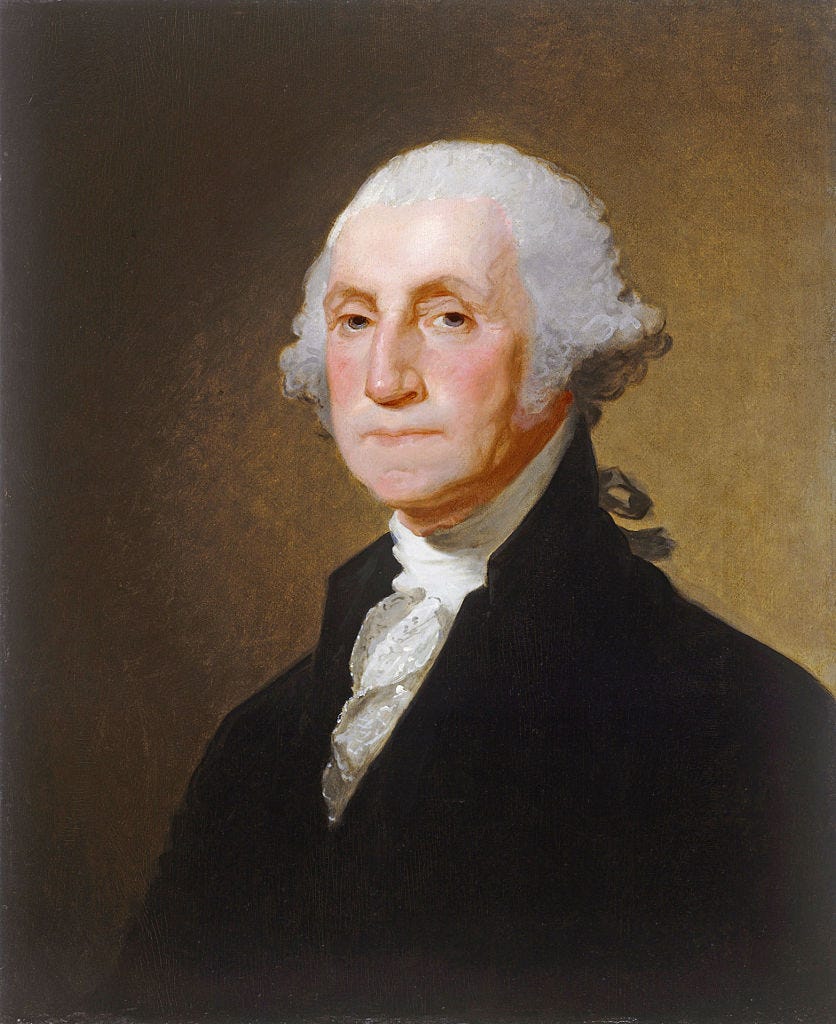
But by the 1820s, virtually no American men wore periwigs at all. (James Monroe was our last be-wigged president; his successor, John Quincy Adams, wore his own hair short.) Because periwigs disappeared from the U.S. shortly after the Revolutionary War, when many newly-minted American citizens wanted to distance themselves from English consumer goods and aesthetics, it was easy for scholars to assume that periwigs were the same as, say, English tea—a newly-odious reminder of the crown—and their disappearance just another casualty of the Revolution.
And yet! What I argue in this book is that we cannot treat these white powered wigs as merely a consumer good. We have to analyze the declining popularity of periwigs alongside another massive hair shift that happened at the same time: white men stopped wearing their own hair long, too, as many European-descended men in North America had been doing for generations. (The evidence for Black men’s hair is sparser than for white men’s hair, but available sources suggest the same uniform shift to short hair for Black men, too.) It’s also super important that this shift happened right as the United States became an independent nation and was therefore grappling with how to define the very notion of who counted as an American both politically and culturally—and hair got completely tangled up in this question. (I cannot stress how hard it is to avoid hair puns when talking about this stuff!!)
This interest in how long or short men’s hair was goes back to basically the beginning of English colonization of North America. White men’s hair length was really an obsession for many early Puritan leaders, who trashed periwigs as excessive and thus unchristian. However, they weren’t just worried about the wigs—their criticism was part of a broader condemnation of long hair on men, regardless of whether that hair was their own or not. Puritan ministers cited biblical mandates about hair and gender, most often 1 Corinthians, when Paul said, “Doth not nature itself teach you, that if a man have long hair, it is a shame unto him? But if a woman have long hair, it is a praise unto her: for her hair is given her for a covering.”
So when white Christian men in New England chose to let their hair grow long, they were signalling to their community that their faith was faltering—that they were not carrying themselves as good Christian men. Some Puritan leaders were so concerned about men’s hair length that they even passed legislation: in 1649, the Massachusetts Bay Colony’s leadership wrote a proclamation condemning men in the colony for wearing long hair and empowering local leaders to police men in their community to make sure they kept their hair short; Harvard incorporated this same prohibition into their dress code six years later.
So while to us, it may seem like an absurd triviality to force men to wear their hair short, for Puritan leaders in the English colonies, short hair was as foreboding and serious as failing to attend church. Another order passed by the Massachusetts Bay Colony in 1675 explained the stakes: because colonists had been behaving in such unchristian ways, God had “heightened our calamity, and given comission [sic] to the barbarous heathen to rise up against us.” Warfare with Indigenous tribes, in other words, was the direct result of colonists’ provoking God’s wrath with their inappropriate behavior—including, crucially, long hair on men. This is the same reason Puritan leaders tried to force the Indigenous men they converted to Christianity to cut their hair short, too: short hair was a powerful, visible, and not easily reversible signifier of Christian faith (unlike wearing English clothing or shoes, for example).
About a hundred years later, as these English colonies were transforming themselves into the new United States in the aftermath of the Revolution, hair length once again became important. As early American political leaders conceptualized who could be (or become) a political citizen of this new nation—and especially the gender and racial borders of American citizenship—conversations about long hair and short hair grafted on to conversations about American identity itself.
Hair length thus became this kind of visual shorthand in early America. Short hair signaled white masculine political power and social citizenship; a white man’s short haircut, simple and basic and easy (and cheap) to maintain, communicated what early Americans would call his self-mastery. (The racial undertones of “mastery” are absolutely on purpose!!)
On the other hand, long hair signaled the absence of political and social power; it was the style of Indigenous people resistant to assimilation, women too subjugated to men to be fit to vote, and immigrants—including Chinese men who wore long ponytails called queues—ineligible for citizenship. What was exciting to discover is that these conversations about hair length can really help us see how American conceptions of masculinity and male political citizenship were racialized as white from their very inception—a whiteness that was in tension with (and often defined in opposition to) not just African-descended men, but also Indigenous North American and East Asian men, too.
Can you talk a bit more about men’s facial hair, the idea that “the Caucasian is the only bearded race,” and the maintenance of patriarchal white supremacy? (Also, how that discourse transformed to the point that writers in the 1920s were effectively eulogizing the beard, convinced it would never return?) (I think this answer will explain a lot of things to anyone who’s had someone born before 1950 chastise them about their facial hair)
The chapter on facial hair is actually where this whole book began back when I was a first year graduate student! I was fascinated by freak shows as this extremely popular type of popular entertainment in the nineteenth century, and especially by what audience members might be learning about gender and race and American identity when they attended these shows. So I wrote this paper on Bearded Ladies—who became basically ubiquitous in American freak shows after the 1850s—and I kind of stumbled onto the fact that the era of the Bearded Ladies mapped almost perfectly onto the era in which white and Black American men began wearing beards, mustaches, and other forms of prominent facial hair to an astounding and unprecedented degree in U.S. history. (Here again we can see evidence in the presidents’ faces: from the beginning of Abraham Lincoln’s term in 1861 through the end of William Howard Taft’s term in 1913, all but two presidents sported a beard or mustache or both. Before 1861 and since 1913, not a single president has worn a beard or mustache of any kind while in office.)
Especially juxtaposed with the Bearded Lady, we can see the gendered meanings of facial hair pretty immediately—but what’s so fascinating is that the mid-nineteenth-century beard was also deeply racialized, too. Beards became symbols of not just manhood and male supremacy, but specifically of white male supremacy. In Western European culture, beards had long been linked to masculnity—even during periods when few men actually wore beards, such as the entire eighteenth century!—but in the nineteenth century, white scientific and cultural authorities took an old story about the masculine beard and imbued it with new political urgency: beards indicated which bodies fit within the bounds of political citizenship, and, just as importantly, which bodies did not.
So what happened in the mid-nineteenth-century is that white men who were already deeply convinced of white supremacy—many of them scientists by training or trade—basically dragged the beard into their body of evidence for why white men were both superior and, crucially, best-suited to political and social rule. (If you’re thinking wow, this sounds like the opposite of the scientific method, you are absolutely right: the conclusion—i.e., white men should be in power—preceded the evidence—i.e., many white men are now growing beards. The evidence was an attempt to shore up, with the prestige of science, what many white Americans believed was the self-evident truth of white supremacy.)
The guy who yelled about this the most was a Canadian-born doctor named John Van Evrie, who self-published a bunch of pamphlets and short books in the 1850s and 1860s, when tensions over race and slavery in the U.S. were at their absolute highest. Van Evrie was the one who declared that “the Caucasian is the only bearded race” in a pamphlet-turned-book first published in 1853. Van Evrie claimed that white men were characterized by a “full, flowing, and majestic beard,” whereas the facial hair found on the faces of men of color was merely a pale imitation—“nothing that can be confounded with a beard.”
Black men’s facial hair growth was “the furthest removed of all” from “the full, flowing, and majestic beard of the Caucasian:” it was, instead, a mere “little tuft on the chin and sometimes on the upper lip.” (This probably goes without saying, but this claim is bullshit nonsense. Plenty of Black men grow facial hair, as Frederick Douglass pointed out to Van Evrie directly.)
But Van Evrie wasn’t just yelling at clouds here: in a book published a decade later, in the immediate aftermath of the Civil War, Van Evrie insisted that Black men’s minimal facial hair was the most important bodily metaphor—even more than skin color—for the impossibility of Black equality: only when white Northerners had “endowed the negro with the full and flowing beard of the Caucasian” would there “be some prospect of the success of their efforts in ‘reconstructing’ the race.” Facial hair, in other words, proved to Van Evrie that white supremacy would remain even after the abolition of slavery.
For the next fifty years, beards, mustaches, and other forms of prominent facial hair were hugely popular among white (and Black) American men. (Truly some incredible photographs of wacky facial hair come out of this period!!) And then, in the 1910s and 1920s, they almost completely disappeared. This is a moment when we are really reminded that history is complicated because I don’t think there was just one simple reason for the beard’s decline. It was likely a combination of factors: the invention and marketing of the safety razor made shaving cheaper, easier and safer, for example, and new understandings of science and the body (especially the discovery of germ theory) made a bushy beard seem like just a complete germ cesspool.
But the beard’s disappearance was also part of the broader shift in hair’s cultural meaning—the declining consensus, in the early twentieth century, that hair was a body part capable of transmitting internal truths. This shift drained much of the power from narratives about the beard as biological evidence of white male supremacy. After the 1920s, the beard went back to signalling, as it had done in the eighteenth and early nineteenth centuries, something antisocial and unsettling or even threatening: a hermit, a radical, an agitator, or (gasp!) a Communist!
You write that “hair disguises threatened the very foundation of the culture of hair: the narratives of hair’s stability and legibility that many Americans — but especially the middle- and upper-class white Americans who held the most social and political power — trusted so fervently.” Can you share some of the stories of how hair figured into “martial cross-dressing narratives,” how Chinese immigrants got their “hair right” in order to cross the border after the passage of the Chinese Exclusion Act, and the ubiquitous stories of hair transformation as a component of criminality?
I’m so glad you asked about this because the stories of hair disguises I read for this book were some of the most fascinating pieces of evidence! I read so many news reports from the late nineteenth century of men and women arrested by police officers, particularly in those newly-bustling big cities, whose collection of criminal accessories included a wig or fake beard. It felt almost like a trope—so much so, that simply to be wearing a wig or fake beard might draw the suspicion of a cop and the presumption of criminal intent. One of the most bizarre examples was local to me: in the 1880s and 1890s, the San Francisco Police Department arrested at least six people for the crime of wearing a false beard! In the context of a culture that believed hair communicates who a person really was, a hair transformation wasn’t just a way for someone to look less like a police detective’s description of their appearance after committing a crime; it disrupted hair’s very ability to reveal the truth.
But what I point out in the book is that stories of hair disguise aren’t just about police power—they also showcase the way that hair’s fundamental malleability (in a way so unlike flesh and bone!) left open exciting possibilities for play, for reinvention, and even for subversion.
I loved learning about Loreta Janeta Velazquez, for example, who served in the Confederate Army under the alias Lieutenant Harry T. Buford. As Velazquez wrote in her memoir The Woman in Battle (1876), simply donning a uniform was not enough to allow her to pass as a man on the battlefield—she needed to change her hair, too, to be believed. Velazquez cut her hair short and purchased a fake mustache that she glued to her face; her friend suggested the mustache would not only give her appearance “a more manly air” but would also, crucially, make her disguise more convincing.
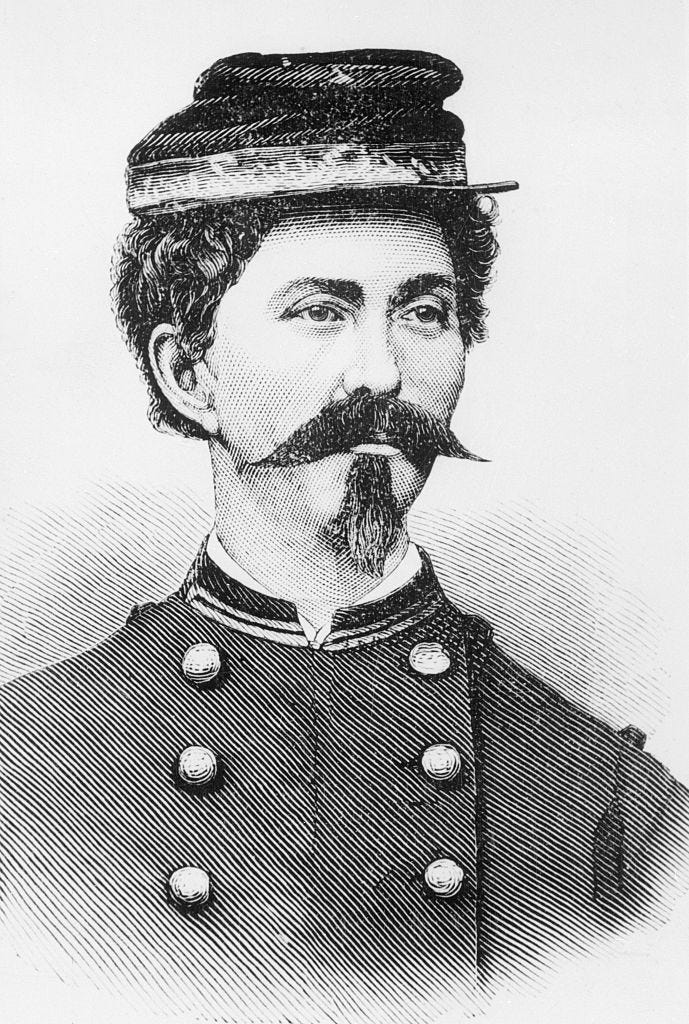
She even devoted a whole section of a chapter to her mustache—a section titled, delightfully, “My Mustache in Danger”—in which she described how she was worried she might be unmasked as a woman because she drank a glass of buttermilk (normal!!) and was scared the buttermilk might loosen her mustache glue. (Spoiler: the glue was strong and the mustache didn’t budge.) Throughout the rest of the book, Velasquez frequently twists her mustache during moments of doubt about her identity, but she is never unmasked. Her mustache and short hair make this possible.
Another even more incredible story of hair disguise is that of José Chang, a Chinese–Mexican man who ran a border smuggling operation along the U.S.–Mexico border during the Chinese Exclusion Act era (between 1882 and World War II), when the U.S. forbade nearly all Chinese people from immigrating to the United States. Chang disguised Chinese immigrants as Mexicans to help them enter the U.S. without arousing suspicion. To enact this disguise, Chang didn’t just make the immigrants change their clothing—he also cut off their queues. This story points to exactly why a hair disguise could actually be a much more powerful tool for transformation—especially across gender and racial lines—than clothing (which could be removed) or artificial skin darkening (which would rub off or fade): most kinds of hair alterations would remain in place, at least for a little while. I argue in the book that hair indexed national belonging in the nineteenth century—and sometimes, hair fraud could undermine even federal immigration laws designed to keep the United States white.
As a way of connecting us to the present, I’d love to hear your thoughts on hair autonomy and self-sovereignty — it comes through so vividly in the conclusion of the book, and in the ways hair is still regulated in so many arenas today.
I think this is one of the most powerful ways we can see the legacy of this nineteenth-century story in the present: Americans may no longer define our hair as a body part, but I think for many of us the link between bodily autonomy and hair autonomy feels intuitive (though I'd love to hear how your readers feel about this connection in their own lives and communities!).
There are strong historical precedents for this connection, too, where institutional control of the body extended to control of the hair. This includes institutions like the military and prison, in the past as it is in the present. In the early 1800s, for example, Colonel Thomas Butler was court-martialed twice because the Army implemented a policy requiring a short haircut for all U.S. soldiers, and Butler refused to comply. (This badass took his protest all the way to the grave: he told his friends to cut a hole in the back of his coffin so his hair could hang through it.)
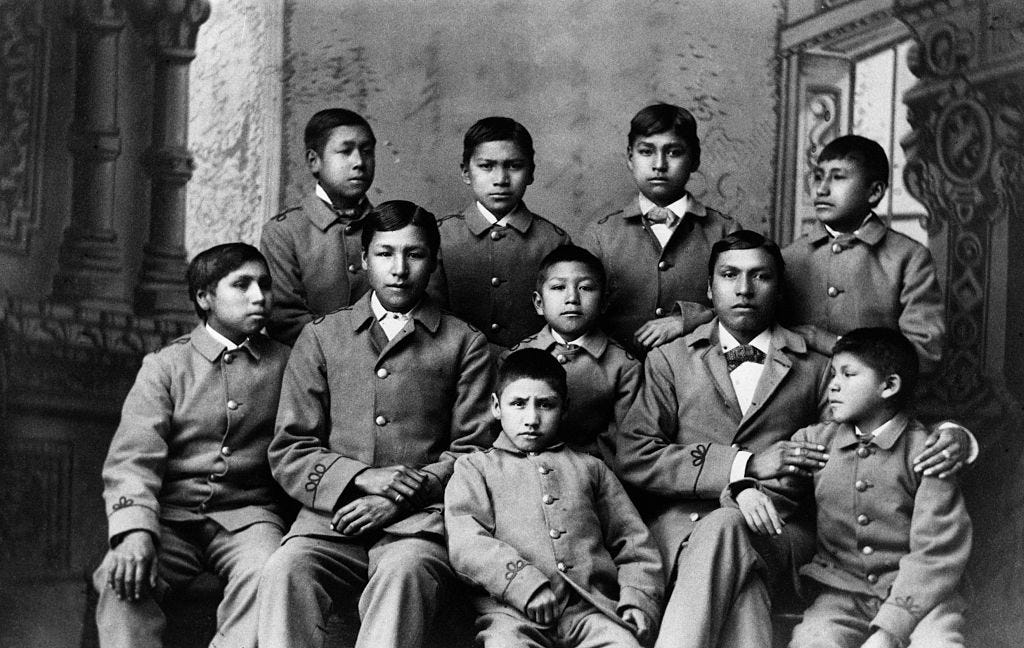
But stripping a person of their self-sovereignty by forcibly controlling their hair—that also describes the institution of slavery, as well as federal policy towards Indigenous people. In the book I describe some of the harrowing stories of enslaved women whose hair was forcibly cut or shaved by their enslavers and Indigenous children, who received compulsory haircuts when they arrived at federal boarding schools. Thus, controlling one’s own hair is a crucial part of self-sovereignty.
We still live today with a version of this institutional control of the hair—one of the nineteenth century’s more troubling hair legacies—particularly for Black men and women, since some school and workplace dress codes still prohibit hairstyles like box braids, locs, and afros. But I am also optimistic about the possibility for change. I write in the conclusion about the Create a Respectful and Open Workplace for Natural Hair Act (or, CROWN Act), which prohibits discrimination based on hair texture or style. It became state law in my home state of California in 2019, and in the six years since has become law in a total of twenty-three states total. (A federal CROWN Act passed the House in 2022 but got stuck in committee in the Senate. Senator Cory Booker reintroduced the CROWN Act earlier this year.)
One last meta-question: this book is so delightfully readable while also being rigorous and absolutely filled with gorgeous archival finds. It was published by a university press, and I know the road to publication was a long one, but how did you think about audience and prose and style as you crafted this book, and what advice would you give to others trying to craft a similar book?
I appreciate this question so much! It was really important to me that this book felt interesting and readable for any curious reader, not just a few dozen fellow academics, and I’m so thrilled to hear that you read it this way, too. The stories that knit together to form this book have always been weird and wacky and actually fun to talk about at parties, and I wanted the book itself to reflect that, too!
Because I am a non-tenure-track lecturer (meaning: I have a full-time long-term teaching position at a university that I love, but unlike the traditional professorial position, my job is wholly structured around teaching, not research), it took me three years after finishing my Ph.D. to even write a book proposal, and then five more years after that to publish this book. I was really fortunate to sign a contract with Harvard University Press in March 2020, about a week after everything in the U.S. started to shut down. (My editor and I were both like, oh this will probably last a few weeks and then I can go do all that archival travel I want to do! Hah!) So part of why the book took so long to publish was about COVID, and a big part of it was about the difficulty of squeezing in writing and revision while also teaching and designing a lot of classes.
But I also think my teaching has been a major positive influence on my writing: I try to write the way I talk to my students—like I’m just REALLY EXCITED to nerd out with you about all these kind-of-bizarre-but-also-kind-of-familiar things people were thinking and doing and writing about over 150 years ago. Writing hundreds of lectures over the last eight years has helped me hone my writing voice: I write shorter sentences, I incorporate clear signposting and reiteration of the main ideas, I provide lots of context (and try not to assume prior knowledge of the subject), and I really try to stay away from jargon. I was also lucky to have worked with fantastic editors at HUP who were on board with this book reflecting my own voice. They didn’t push me to be more jargon-y or theory-heavy, or to cut out the little jokes that I wrote mostly to make myself chuckle.
One thing I believe so deeply as a teacher and as a historian is that accessibility and rigor are not antithetical. I don’t think you have to choose between readability and broad appeal versus lots of detailed historical examples in-text and a dense forest of endnotes at the back of the book. I always tell my senior thesis students to trust your scholarly voice, and I think that’s the advice I’d give here too: academic writing doesn’t have to just be one thing! Gaining confidence in your own scholarly voice also really benefits from reading. Reading a lot and reading a lot of different kinds of writing—academic and otherwise—is powerful because it showcases the different kinds of voices that are possible as you are working on crafting your own. ●
You can buy Whiskerology: The Culture of Hair in Nineteenth Century America here — and find out more about Sarah Gold McBride’s work here.
**ALSO!!! I have two extra copies of the book and would love to send them to two lucky Culture Study Readers. Comment below with a question and/or your favorite part of the interview, and I’ll pick two comments at random (and then get in touch to get your address!)**
***ALSO ALSO: Seattle area Culture Study readers, Sarah is going to be at Elliott Bay this Thursday, July 24th at 7 pm! Go see her talk about periwigs in person!!!
And if you enjoyed that, if it made you think, if you *value* this work, or maybe if you just want all the weird and diverting and USEFUL threads content — consider subscribing:
Subscribing also gives you access to the Weekly Subscriber-Only Links Round-Up, including the Just Trust Me (see below!). Plus it’s a very simple way to show that you value the work that goes into creating this newsletter every week.
***AND IF YOU WANT A LINK TO THE CULTURE STUDY PUMP-UP SONGS PLAY-LIST, IT’S BELOW THE PAYWALL!***